
Have you experienced complications after plastic surgery in Colombia?
Are you planning to undergo cosmetic surgery and want to protect yourself legally before traveling?
Colombia has become one of the leading destinations for medical tourism in Latin America. Every year, thousands of foreign patients travel to Bogotá, Medellín, Cali, and Cartagena seeking high-quality cosmetic procedures at competitive prices.
However, plastic surgery is not only a medical decision. Also it is a legal and financial decision.
When complications occur, foreign patients often face uncertainty:
- Do I have rights as a non-resident?
- Can I sue from abroad?
- Who is legally responsible — the surgeon, the clinic, or both?
- What if I signed a consent form?
- What is the statute of limitations?
This 2026 legal guide explains your rights, the legal framework, and the available actions under Colombian law.
1. Do Foreign Patients Have Legal Rights in Colombia?

Yes.
Under Article 13 of the Colombian Constitution, all individuals within Colombian territory are entitled to equal protection of the law.
Additionally, Law 1751 of 2015 (Statutory Health Law) recognizes health as a fundamental right, applicable to any person receiving medical care in Colombia — regardless of nationality or immigration status.
As a foreign patient, you are entitled to:
- Access to quality healthcare services.
- Clear and complete informed consent.
- Access to your full medical record.
- The right to file civil, criminal, or administrative claims.
- Legal representation without being physically present in Colombia.
Nationality does not limit your access to justice.
2. What Is Medical Liability in Cosmetic Surgery?

Medical liability arises when a healthcare professional or institution causes harm due to negligence, imprudence, lack of technical skill, or breach of professional duties.
In cosmetic surgery cases, Colombian jurisprudence has often applied a more demanding standard of evaluation compared to other medical specialties. While medical obligations are generally considered obligations of means (best effort), courts have in certain aesthetic cases analyzed the physician’s commitment with heightened scrutiny, particularly when specific results were explicitly promised.
This does not mean that every unsatisfactory result generates liability.
However, liability may arise when:
- There was lack of adequate pre-surgical evaluation.
- The informed consent was incomplete or misleading.
- Unrealistic or guaranteed outcomes were promised.
- Post-operative care protocols were not followed.
- The clinic lacked proper authorization or infrastructure.
Each case must be analyzed individually.
3. What If I Already Returned to My Country?

You do not lose your rights by leaving Colombia.
Foreign patients may:
- Grant a special power of attorney to a Colombian lawyer (signed at a Colombian consulate or apostilled).
- File civil lawsuits without being physically present.
- Participate in hearings via videoconference.
- Receive compensation through international bank transfers.
Cross-border representation is legally viable and increasingly common.
4. What Should I Do Immediately After a Complication?

Time is critical.
Step 1: Protect Your Health
If you experience infection, uncontrolled bleeding, necrosis, fever, respiratory distress, or severe pain, seek immediate medical care, preferably at a different institution for independent evaluation.
A second medical opinion may later serve as crucial evidence.
Step 2: Preserve Evidence
Documentation is fundamental.
You should preserve:
- Pre-operative advertisements or promotional materials.
- The signed informed consent.
- All medical records.
- Photographs and videos (with visible dates).
- WhatsApp messages or emails.
- Contracts or service agreements.
- Receipts and medical invoices.
- Travel and accommodation expenses.
Evidence preservation can determine the success of a future claim.
5. Do I Have the Right to My Full Medical Record?

Yes.
Under Law 1438 of 2011, you have the right to obtain a complete copy of your medical file.
This includes:
- Surgical report.
- Anesthesia report.
- Pre-surgical evaluations.
- Post-operative notes.
- Nursing logs.
- Consent forms.
Healthcare institutions are legally obligated to provide this documentation.
6. What If the Clinic Asks Me to Sign a Waiver?

Do not sign any additional document without legal review.
After complications, some clinics attempt to secure:
- Confidentiality agreements.
- Liability waivers.
- Settlement agreements in exchange for corrective procedures.
Such documents may significantly limit or eliminate your right to sue. Any agreement should be carefully analyzed by legal counsel before signature.
7. What Legal Actions Are Available?

Depending on the case, three types of actions may be pursued.
A. Civil Action for Medical Liability
This is the primary mechanism for financial compensation.
Damages may include:
- Corrective surgery costs.
- Medical treatments and medications.
- Transportation and lodging expenses.
- Loss of income.
- Moral damages (pain and suffering).
- Damage to life project (impact on quality of life).
Statute of limitations: generally 10 years.
B. Criminal Complaint
If negligence constitutes a crime, a complaint may be filed before the Fiscalía General de la Nación.
Common charges:
- Negligent personal injury.
- In extreme cases, negligent homicide.
Statute of limitations: generally 5 years.
C. Administrative Actions
You may file complaints before:
- The Medical Ethics Tribunal.
- The National Health Superintendence.
- The Departmental Health Secretariat.
Statute of limitations: typically 6 months for certain disciplinary actions.
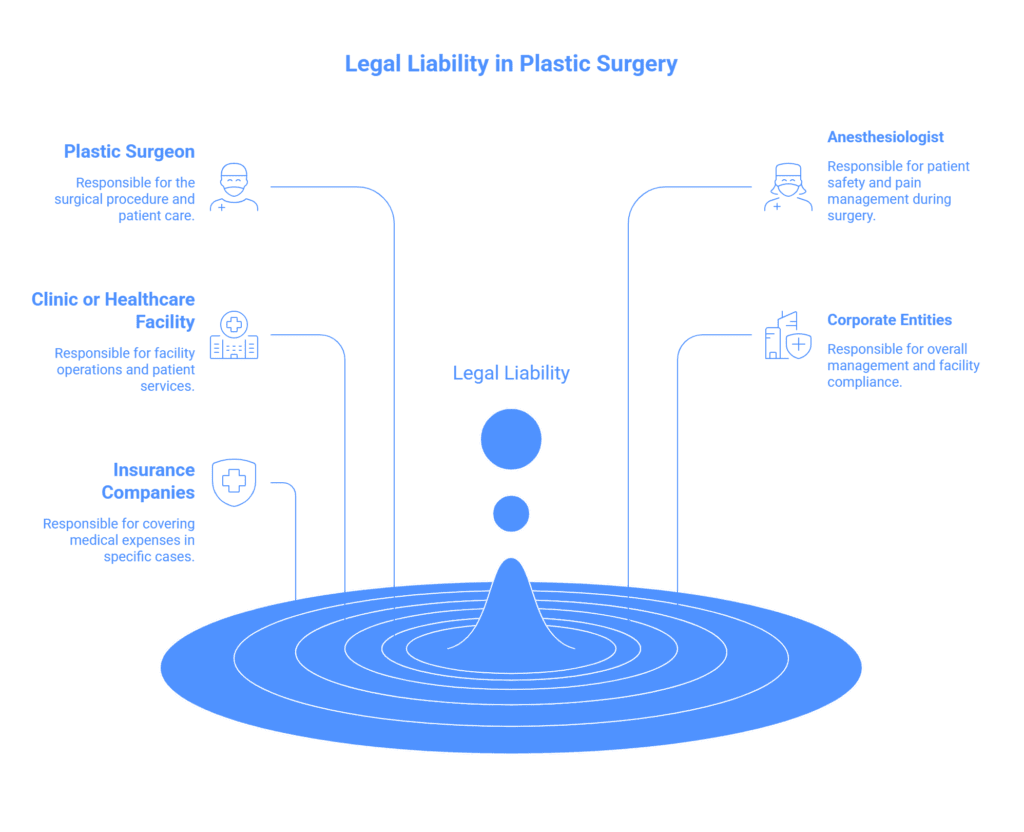
8. Who Can Be Held Legally Responsible?
9. Can I Protect Myself Before Undergoing Surgery?

Yes and this is often overlooked.
Preventive legal measures may include:
- Verification of clinic authorization and regulatory compliance.
- Review of consent forms.
- Analysis of contractual clauses.
- Evaluation of surgeon credentials.
- Review of liability insurance coverage.
- Risk assessment before traveling.
Pre-surgical legal due diligence significantly reduces exposure.
If you are considering cosmetic surgery in Colombia, legal protection should begin before the procedure.
We invite you to review our Preventive Legal Guide, designed to help patients assess risks, verify clinics, and protect their rights in advance.
Read the Preventive Guide before making your decision.
Frequently Asked Questions (Q&A)

If I signed informed consent, can I still sue?
Yes. Informed consent does not authorize negligence.
What if the result is simply “not what I expected”?
Dissatisfaction alone does not automatically create liability. A legal analysis is required to determine whether there was negligence or breach of duty.
How long does a case take?
Medical liability cases may take several months, depending on complexity.
Can I recover emotional damages?
Yes, Colombian courts recognize moral damages and damage to life project.
Is Colombia safe for cosmetic surgery?
Colombia has highly qualified professionals and modern facilities, but regulatory compliance varies. Due diligence is essential.
Our Services for International Patients
At Nieto & Nieto Lawyers, we assist foreign patients in:
- Pre-surgical legal risk assessment.
- Regulatory compliance verification of clinics.
- Contract and informed consent review.
- Civil medical liability litigation.
- Cross-border representation.
- Negotiation and structured settlements.
We combine healthcare regulatory expertise with litigation experience to provide strategic protection before and after surgery.
Schedule a Confidential International Consultation
If you suffered complications or wish to protect yourself before surgery professional legal guidance can make the difference between uncertainty and structured action.
Contact: compliance@nietolawyers.com
International consultations available in English and Spanish.
Your health is personal.
Your legal protection should be strategic.
 WhatsApp